
Rockport Market Update – May 2026
Key Takeaways
-
Stocks stage strong comeback
-
Inflation edges upward
-
Oil prices remain elevated
-
The Fed faces a challenging environment
Stock Market Recap
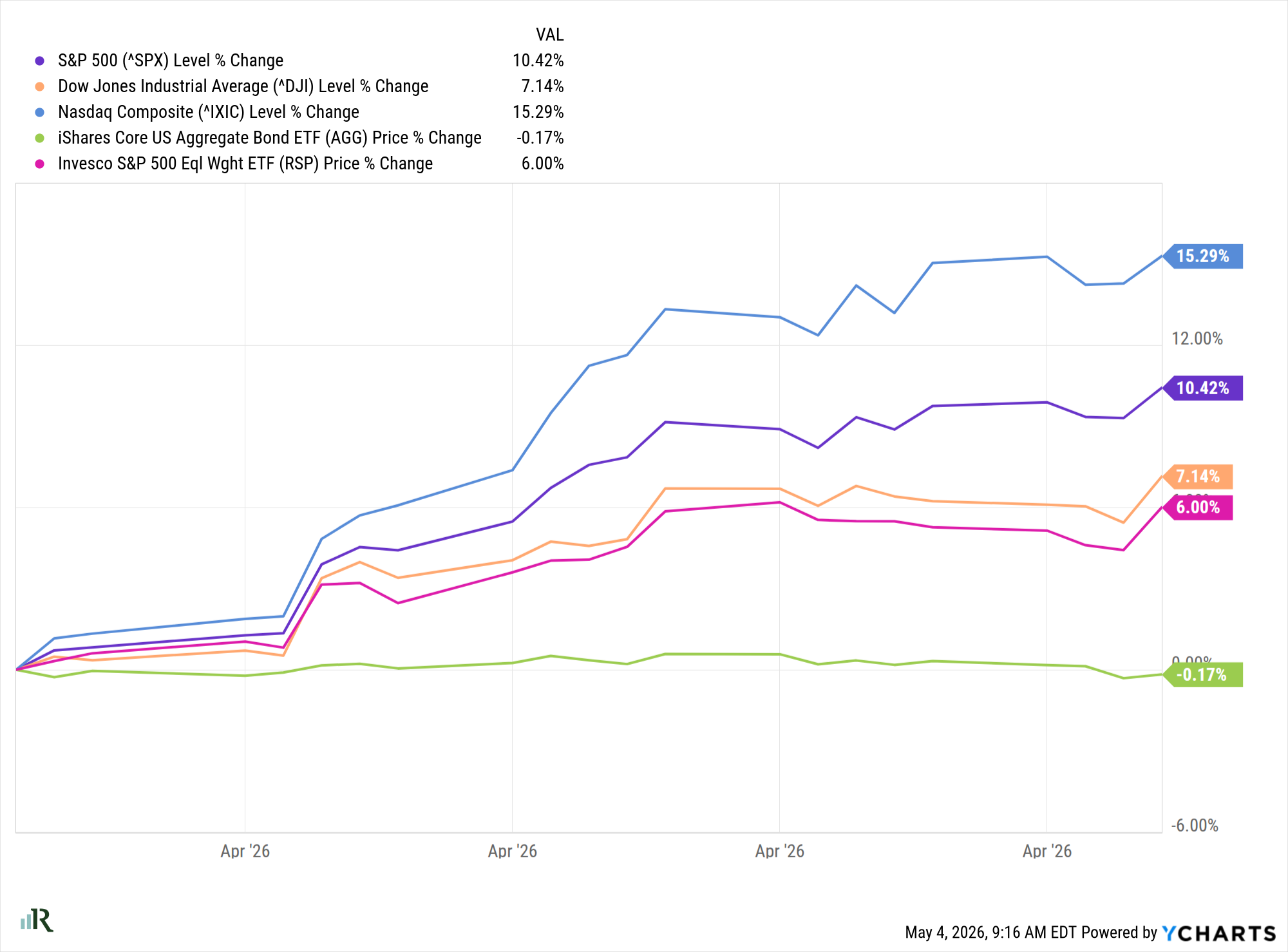
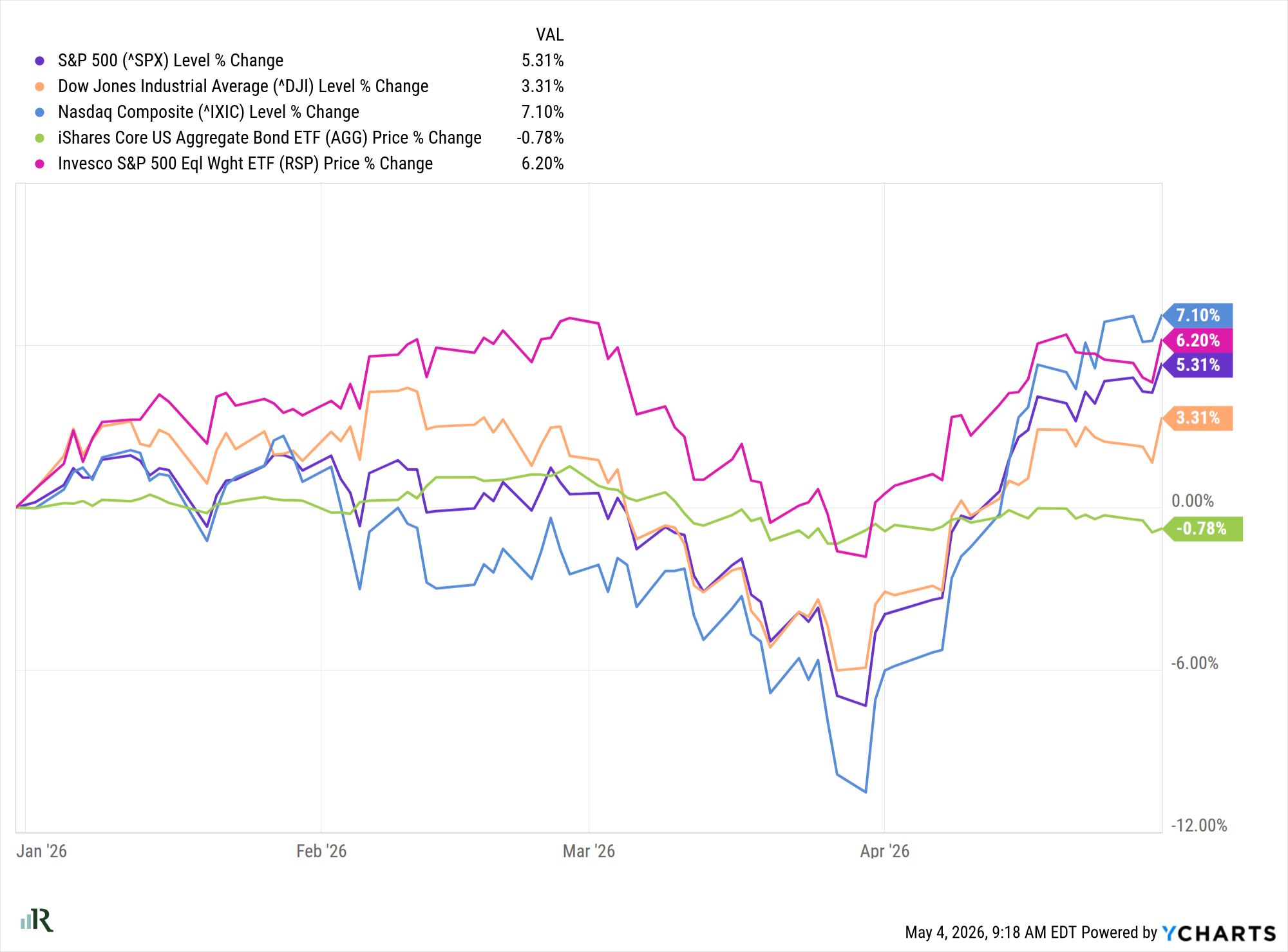
After a challenging March, stocks rebounded strongly in April. The S&P 500 gained 10.42% for the month— its best performance since November 2020— while the NASDAQ Composite surged an even more impressive 15.29%. On a year to date basis the S&P 500 index is now up 5.31%, a pleasant turn around from the negative readings last month.
Given the significant selling pressure in late February and March, a sharp rebound was not entirely unexpected. Markets often experience powerful recoveries following periods of heightened volatility. That said, the strength of April’s rally is somewhat surprising considering that oil prices, while off their highs, remain elevated, and inflation appears to be settling closer to the 4% range.
Inflation
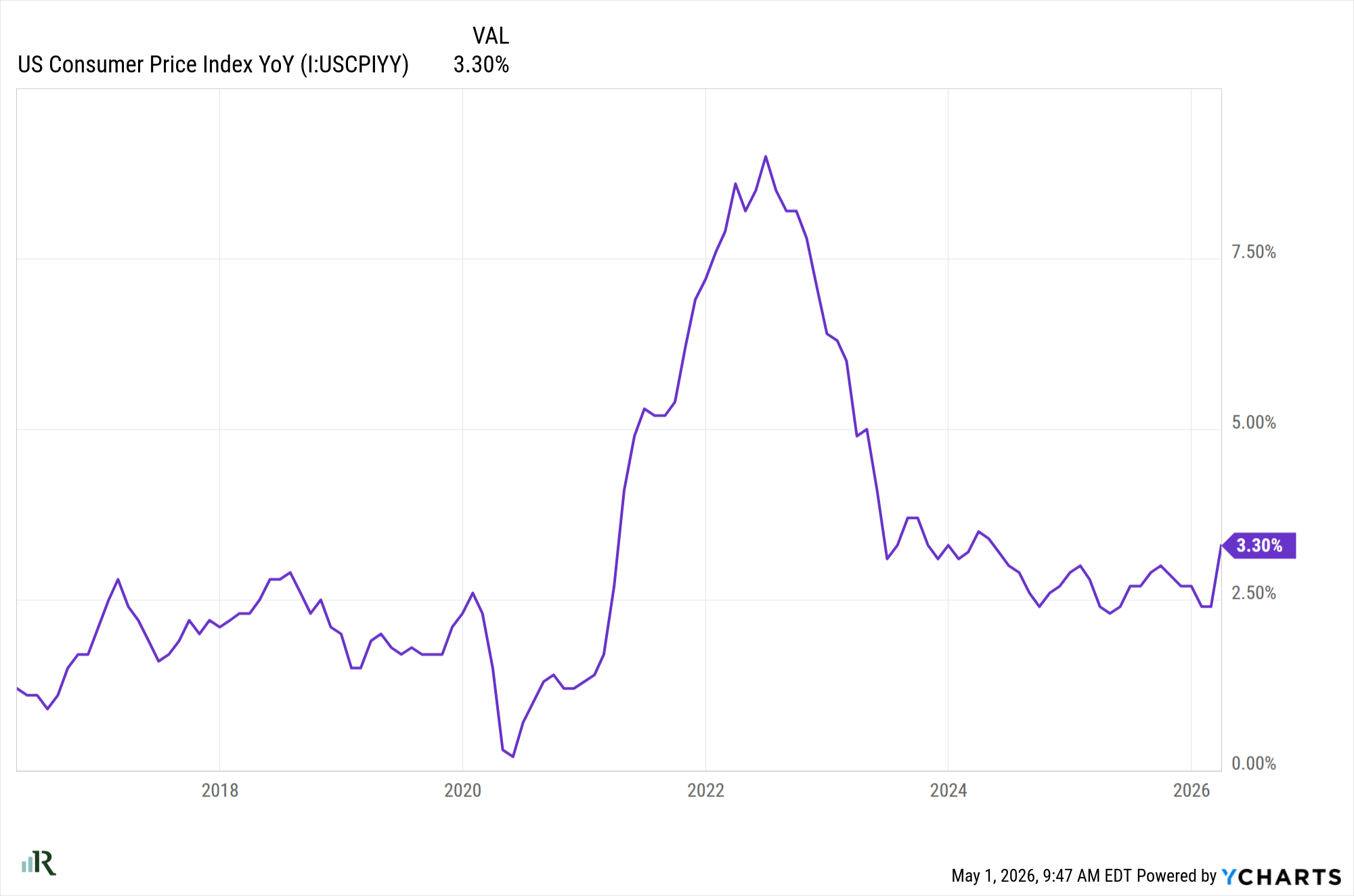
Inflation, as measured by the Consumer Price Index (CPI), rose to 3.3% year-over-year, up from 2.4% in the prior report. The increase reflects renewed pressure from higher energy prices, which are offsetting some of the easing we’ve seen in areas like housing and core services.
Looking ahead, if energy prices remain elevated, it would not be surprising to see inflation trend closer to 4% over the next couple of months.
Oil Prices
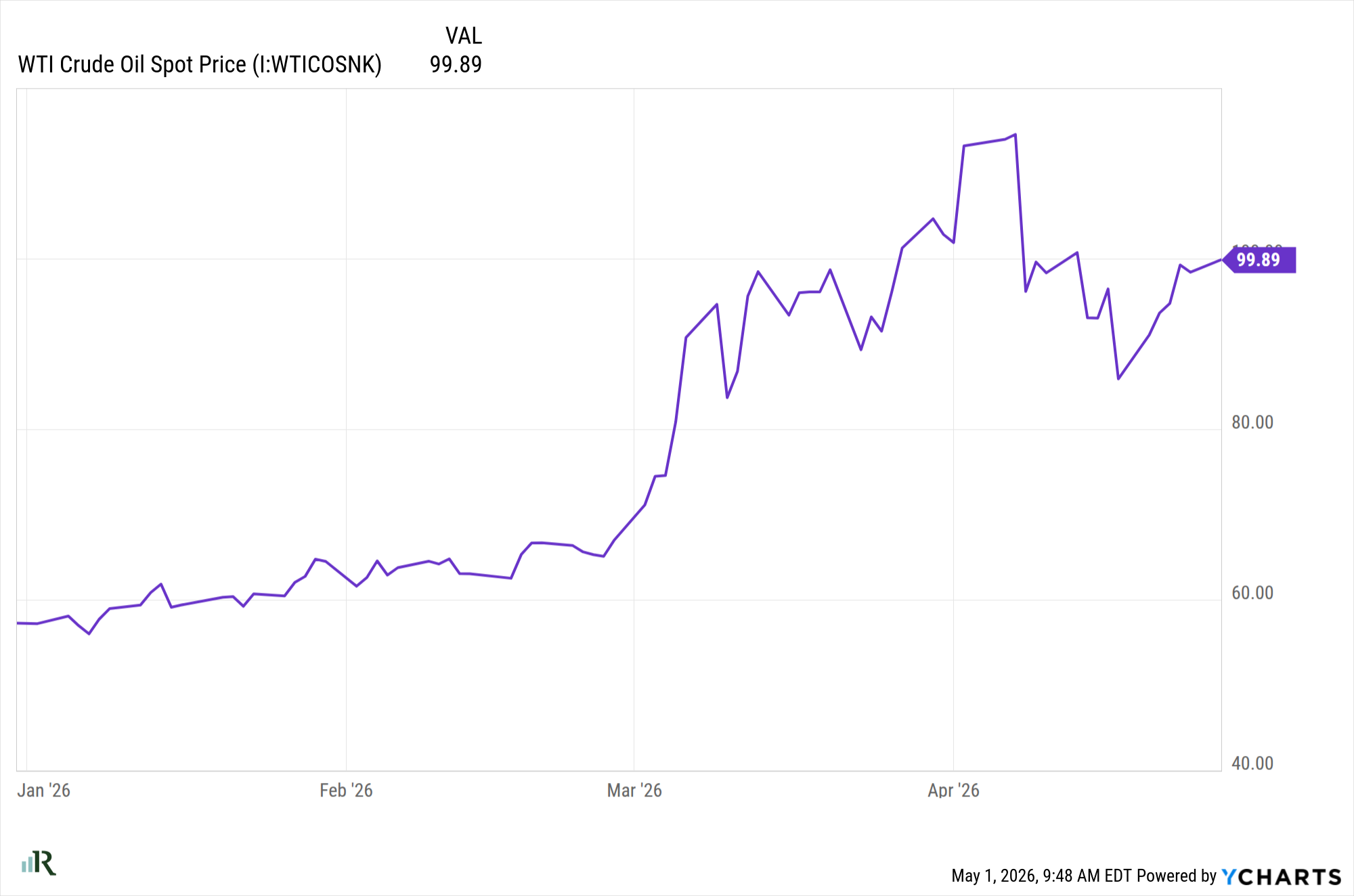
Oil prices have risen noticeably from around $65 per barrel for West Texas Intermediate crude oil in early March and have remained close to the $100 level in recent weeks. The longer prices stay elevated, the more impact they are likely to have on the broader economy.
Higher energy costs tend to act like a tax on consumers, leading to increased prices for gasoline, diesel, and jet fuel. Over time, these higher transportation and production costs can flow through to everyday goods, including food. This creates additional pressure on household budgets, particularly for those already managing tighter financial conditions.
Even if tensions in the Middle East were to ease in the near term, it would likely take time for oil prices to decline meaningfully due to ongoing disruptions and damage to production infrastructure. As a result, the most probable near-term outlook appears to be a period of “higher for longer” energy prices.
The Fed has a Tough Job Right Now
Ongoing inflation pressures and elevated energy costs continue to put the Federal Reserve in a difficult position. Adding to this dynamic is the leadership transition from Jerome Powell to Kevin Warsh, which can naturally introduce some uncertainty around the direction of interest rate policy.
At this point, persistent inflation makes it challenging for the Fed to begin cutting rates. While the desire to ease policy is clear, doing so too soon could risk adding further pressure to inflation, which has already been trending higher. As a result, expectations for rate cuts have been pushed out, with markets currently indicating that reductions are unlikely in the near term— even into the fall.
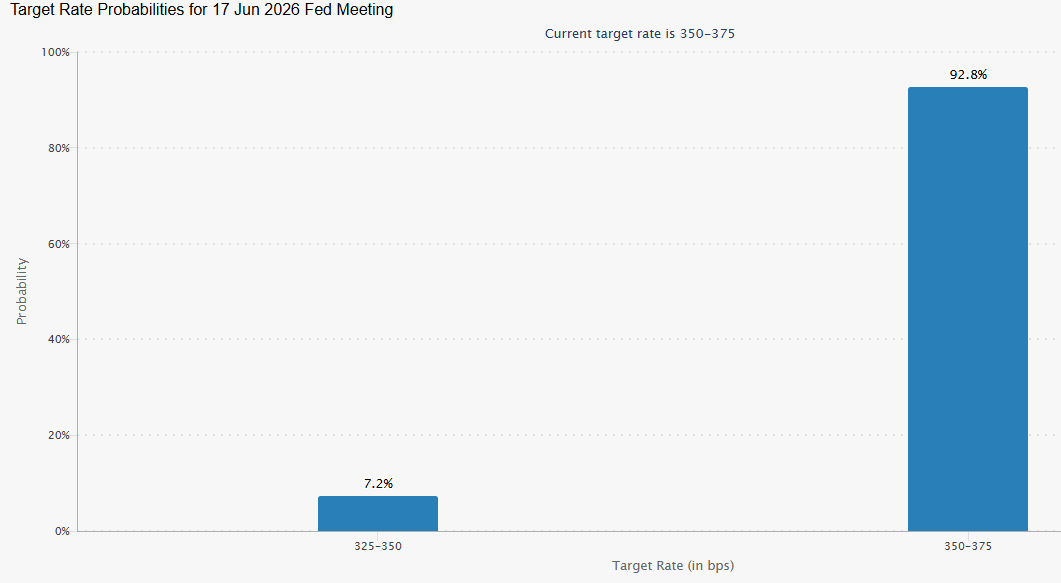
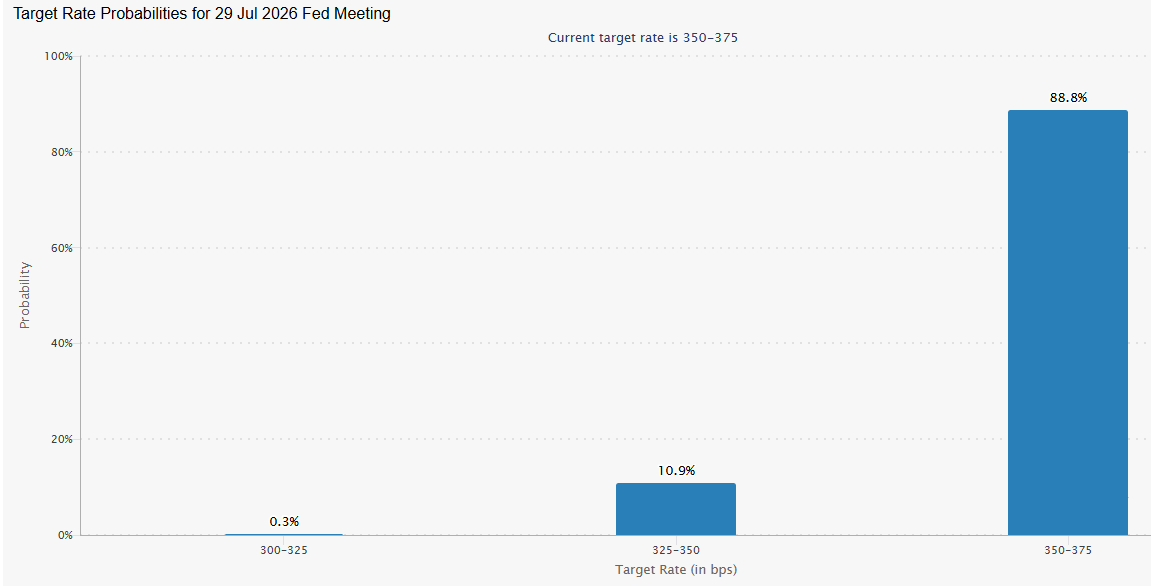
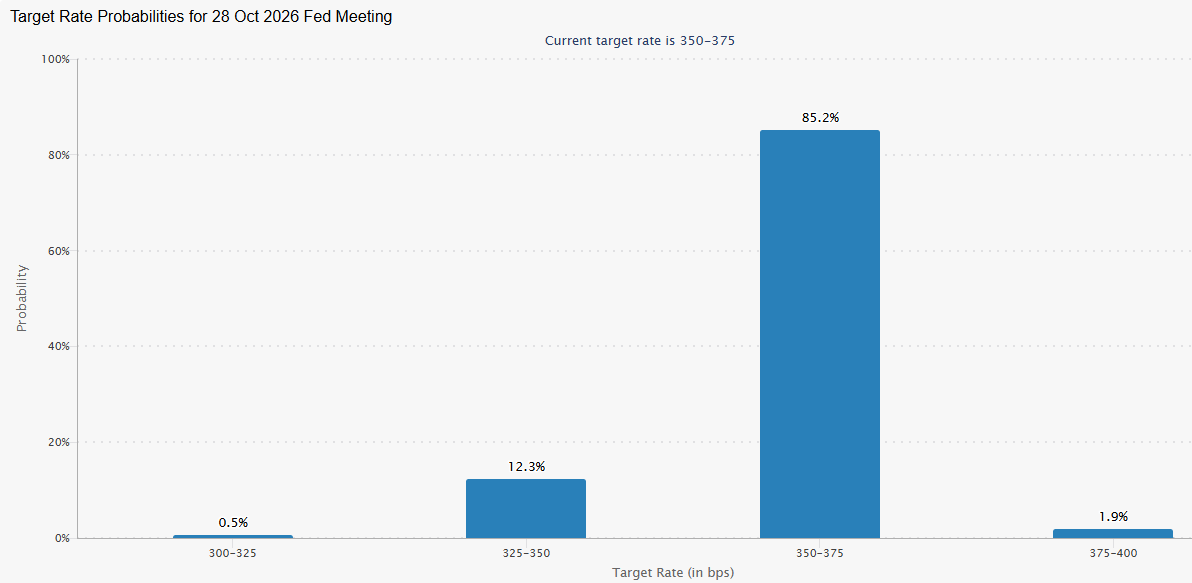
Source: CME FedWatch Tool – CME Group
While the past month has provided a welcome boost to account values and overall sentiment, there are still a number of challenges that markets will need to navigate in the months ahead. Factors such as elevated inflation, higher energy prices, and uncertainty around interest rate policy could continue to create periods of volatility.
As always, markets tend to look ahead and adjust quickly to changing conditions. Staying focused on long-term goals and maintaining a disciplined approach remains the most effective way to navigate both the opportunities and uncertainties that lie ahead.
Information as of 5.5.26
Securities offered by Registered Representatives through Private Client Services, Member FINRA/SIPC. Advisory products and services offered by Investment Advisory Representatives through Rockport Wealth LLC, a Registered Investment Advisor. Private Client Services and Rockport Wealth LLC are unaffiliated entities. The opinions contained herein are that of the authors not necessarily that of Private Client Services LLC and there should not be any guarantees assumed from the information presented.
Investments in securities do not offer a fixed rate of return. Principal yield and/or share price will fluctuate with changes in market conditions, and when sold or rendered, you may receive more or less than originally invested. No system of financial planning strategy can guarantee future results. Investors cannot directly invest in indices. Past performance does not guarantee future results. The performance numbers we mention are indexes. If you’re a client, we manage a custom portfolio for your particular situation and the performance will be different. You cannot invest directly in an index. Investing in an index fund involves fees and will reduce your overall return compared to the index.
Charts produced at yCharts.com
Rockport Wealth Advisors is a DBA of Rockport Wealth, LLC, a fee-based Registered Investment Adviser (RIA) registered with the Securities and Exchange Commission and offering a full range of professional services. The scope of any financial planning and/or consulting services to be provided depends upon the needs of the client and the terms of the engagement. Please see our CRS & ADV disclosure documents for more information about our business.