
Rockport Market Update – October 2025
Key Takeaways
-
Inflation increases– Fed cut rates in the face of it
-
Fed cuts rates .25% signaling 2-3 more cuts this year
-
Government shutdown
Market Review – September 2025
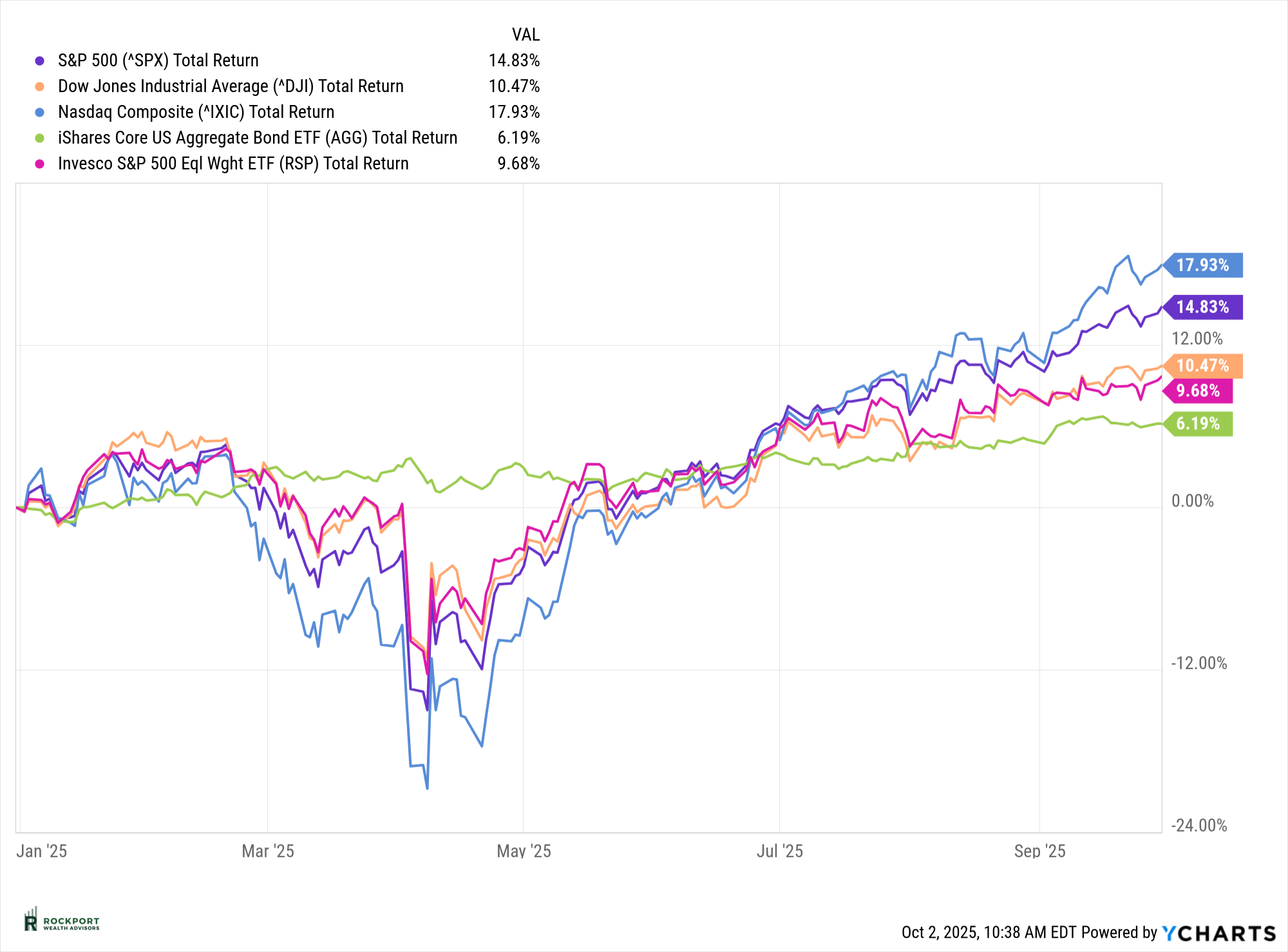
In what can only be described as a remarkable run since the market lows in early April, the S&P 500 posted another strong month in September, gaining 3.65% on a total return basis. Year to date, the index is now up 14.48%, reflecting both price appreciation and dividends. This performance closes out the third quarter and puts an end to the historically weak season for stocks, as markets defied typical trends with impressive gains during August and September— two months that have traditionally been among the most challenging for equities.

Inflation Update: Rising CPI Signals Continued Upward Pressure on Assets
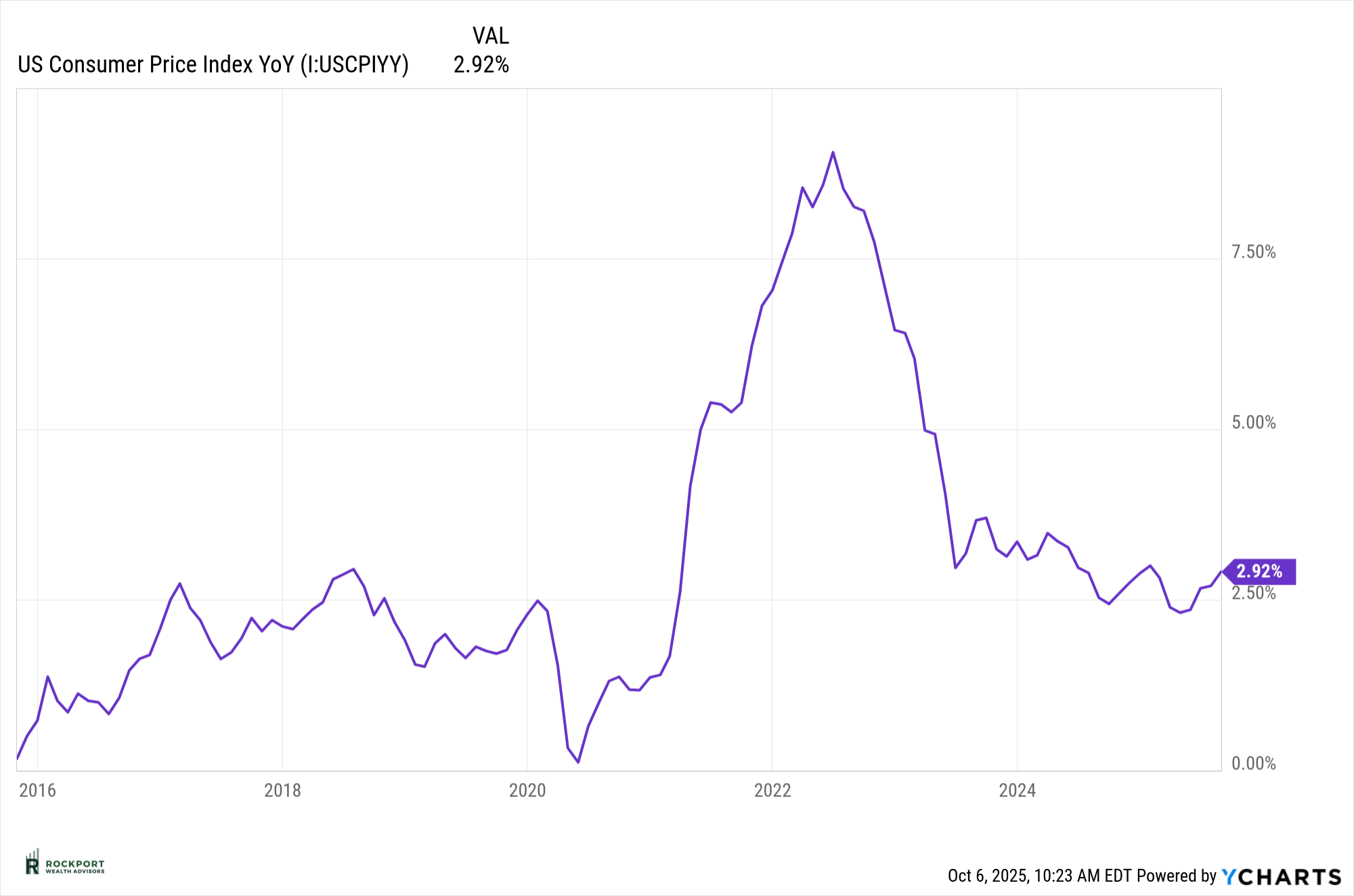
Inflation, as measured by the Consumer Price Index (CPI), rose again in September to 2.92%, up from 2.70% in the prior month.1
This ongoing increase has played a role in lifting asset prices, as higher inflation often translates to higher nominal values for financial assets. Since the April lows in both inflation and equities, this trend has been evident. Accelerating core goods inflation and potential impacts from tariffs appear to be key contributing factors.
Federal Reserve: Rate Cut Signals Shift Amid Persistent Inflation
As expected, the Federal Reserve lowered interest rates by 0.25% on September 17th. While the Fed points to a softening labor market as justification, inflation remains elevated— making additional cuts seem counterintuitive. Nevertheless, markets are currently pricing in over a 95% chance of another rate cut in October, suggesting that rates will likely decline at least once more in 2025.2 These moves have also contributed to pushing asset prices higher.

Source: CME FedWatch Tool – CME Group
Government Shutdown
At midnight on October 1st, the federal government officially began a temporary shutdown as Democrats and Republicans work to resolve their budget disagreements. While media coverage around government shutdowns tends to be intense, they are not as rate as they may seem. Since 1990, there have been six shutdowns, lasting anywhere from 3 to 35 days. Historically, neither the economy nor the stock market has shown significant long-term effects from these events. The main concern lies in the duration— if the shutdown extends for an extended period, it could begin to weigh on GDP growth. For now, it’s still too early to determine any potential economic or market impact.
As we head into the fourth quarter, markets will continue to weigh a mix of economic data, corporate earnings, and central bank policy decisions. While uncertainty remains, staying disciplined and focused on long-term goals is more important than reacting to short-term headlines. We will keep monitoring developments closely and provide updates as conditions evolve. As always, thoughtful diversification and a steady approach remain the best ways to navigate whatever the markets may bring in the months ahead.
Information as of 10.7.25
Securities offered by Registered Representatives through Private Client Services, Member FINRA/SIPC. Advisory products and services offered by Investment Advisory Representatives through Rockport Wealth LLC, a Registered Investment Advisor. Private Client Services and Rockport Wealth LLC are unaffiliated entities. The opinions contained herein are that of the authors not necessarily that of Private Client Services LLC and there should not be any guarantees assumed from the information presented.
Investments in securities do not offer a fixed rate of return. Principal yield and/or share price will fluctuate with changes in market conditions, and when sold or rendered, you may receive more or less than originally invested. No system of financial planning strategy can guarantee future results. Investors cannot directly invest in indices. Past performance does not guarantee future results. The performance numbers we mention are indexes. If you’re a client, we manage a custom portfolio for your particular situation and the performance will be different. You cannot invest directly in an index. Investing in an index fund involves fees and will reduce your overall return compared to the index.
1 Charts produced at yCharts.com
2 CME FedWatch Tool – CME Group
Rockport Wealth Advisors is a DBA of Rockport Wealth, LLC, a fee-based Registered Investment Adviser (RIA) registered with the Securities and Exchange Commission and offering a full range of professional services. The scope of any financial planning and/or consulting services to be provided depends upon the needs of the client and the terms of the engagement. Please see our CRS & ADV disclosure documents for more information about our business.