
Key Takeaways
- Markets continued to advance, though the rally has become increasingly narrow with fewer stocks driving gains
- Inflation pressures remain elevated and continue to trend higher
- Oil prices declined modestly
- Expectations for additional interest rate hikes have increased
Stock Market Recap
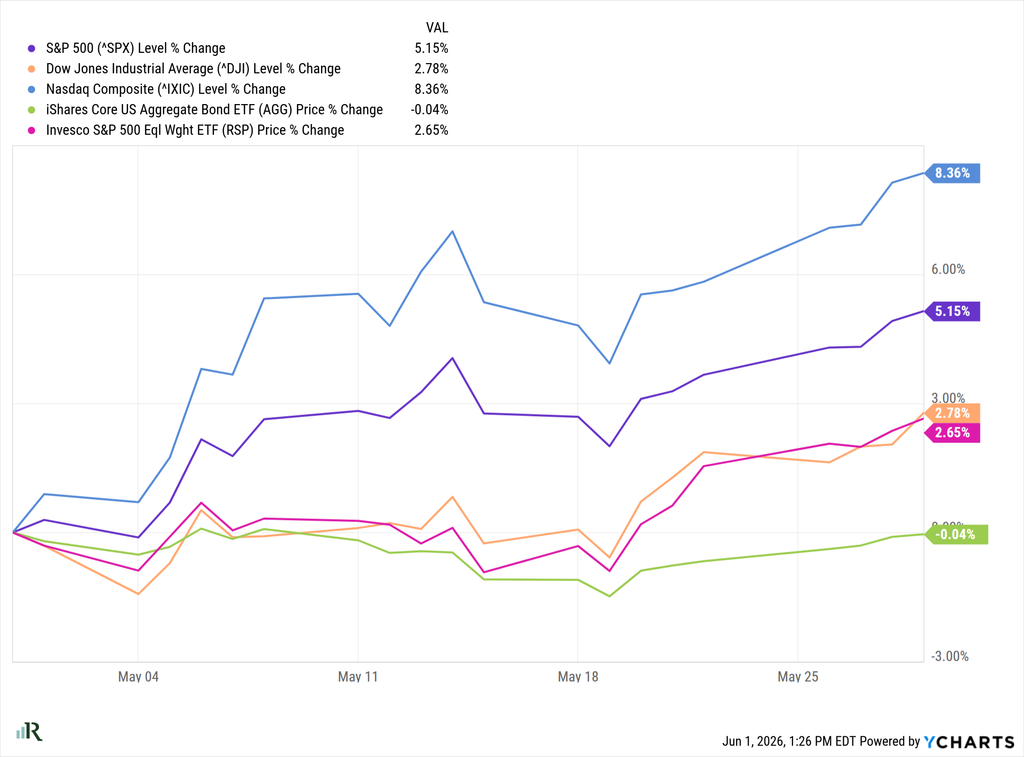
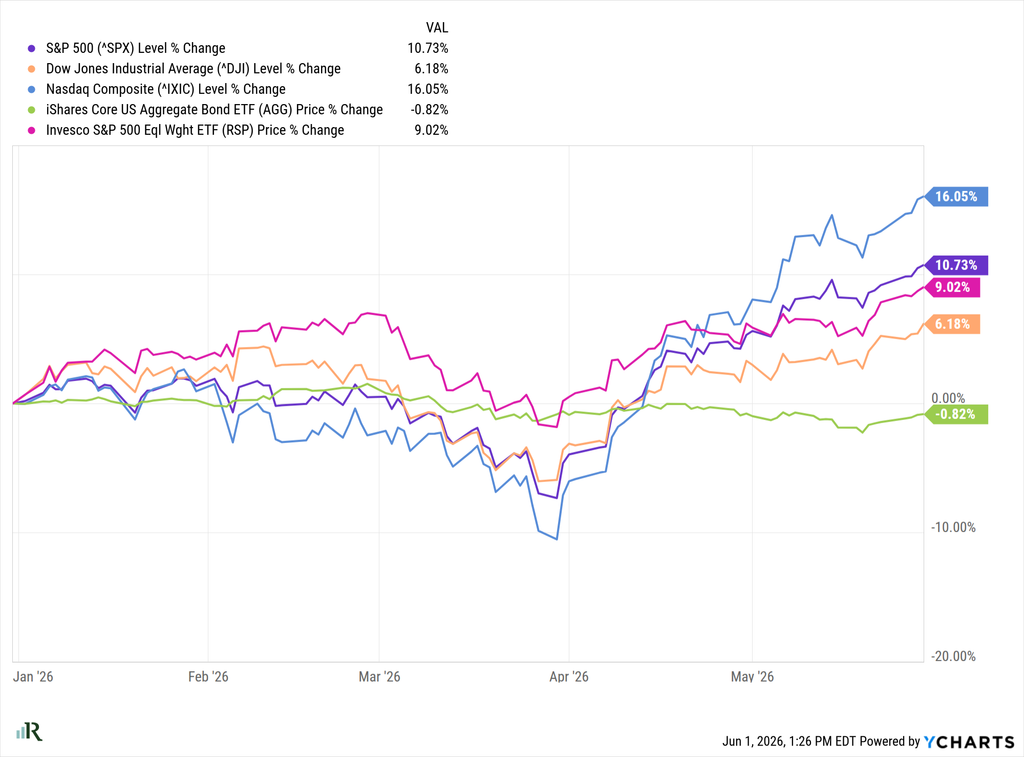
Stocks continued their impressive rebound in May, marking a second consecutive month of strong gains following the modest market pullback that ended in late March. The S&P 500 Index gained 5.15% during the month and is now up 10.73% year-to-date, representing a remarkable recovery from the spring lows.
Technology stocks once again led the way, with the NASDAQ Composite returning 8.36% for the month and 16.05% year-to-date. Much of this strength has been driven by continued enthusiasm surrounding artificial intelligence, with several AI-related companies posting significant gains.
As we move from spring into the summer months, investors will be watching closely to see whether the strong momentum from April and May can continue. Historically, summer has often been a slower period for both market activity and returns. While the overall trend remains positive, we believe some areas of the market have advanced faster than their underlying fundamentals may justify, which could lead to periods of consolidation or increased volatility.
Another development worth monitoring is market breadth. Much of the recent advance has been driven by a relatively small group of large-cap stocks, with a handful of companies once again accounting for a significant portion of the major indexes’ gains. While this has helped push indexes to new highs, broader participation across sectors would provide a healthier foundation for continued market strength.
Inflation
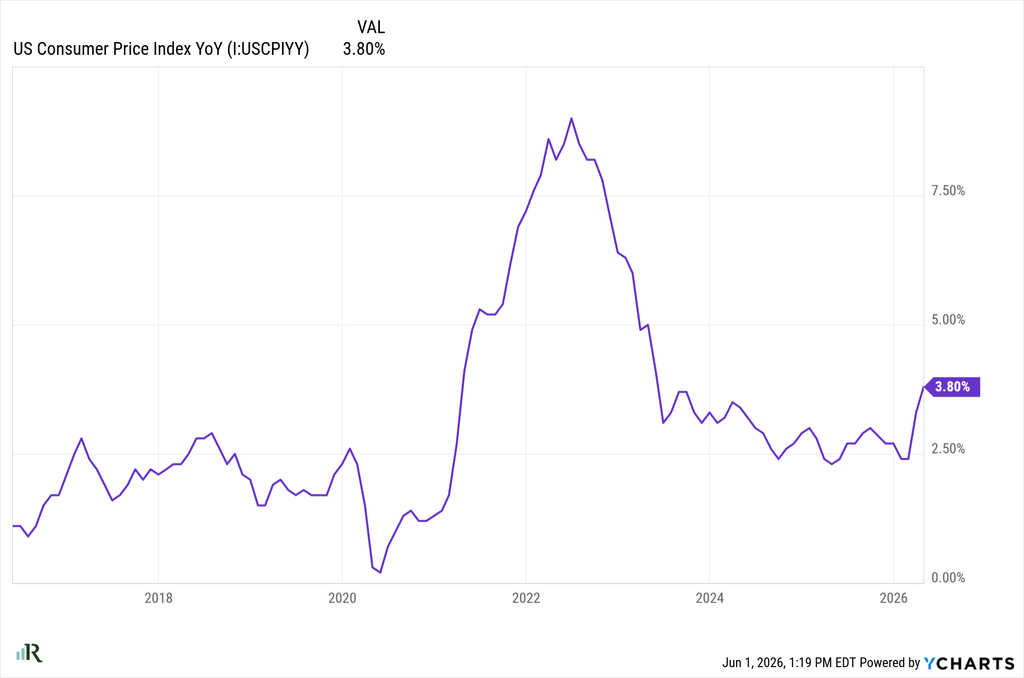
Inflation continued to move higher from its March low of 2.4%, with the most recent Consumer Price Index (CPI) reading coming in at 3.8% on a year-over-year basis. While inflation remains well below the peak levels experienced several years ago, the recent upward trend is a reminder that price pressures have not completely disappeared from the economy.
Looking ahead, it appears likely that the May inflation report, which will be released in mid-June, could show further increases. Ongoing geopolitical tensions in the Middle East, particularly the conflict involving Iran, have contributed to higher energy prices and disruptions in key commodity markets. Historically, rising oil and commodity prices have tended to filter through the economy, increasing costs for transportation, manufacturing, and consumers alike.
The direction of inflation remains one of the most important factors influencing both financial markets and Federal Reserve policy. Should inflation continue to move higher, expectations for future interest rate cuts could be pushed further into the future. For now, investors will be watching upcoming inflation reports closely to determine whether this recent increase represents a temporary spike driven by global events or the beginning of a more persistent trend.
Oil Prices
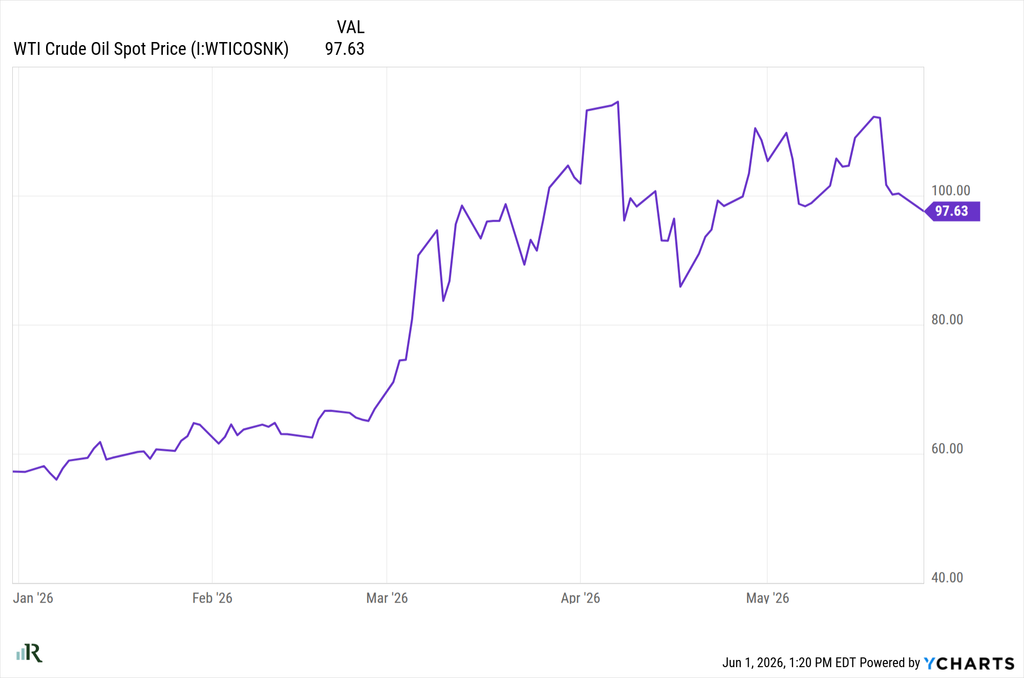
Oil prices, as measured by West Texas Intermediate (WTI) crude, remain elevated at approximately $97 per barrel. Much of the recent strength in energy prices continues to be driven by geopolitical tensions in the Middle East, particularly the ongoing conflict involving Iran, which has created uncertainty surrounding global energy supplies.
At this point, there appears to be little catalyst for a significant decline in oil prices until there is greater clarity regarding the conflict and its impact on production and transportation networks. Even if hostilities were to ease in the near term, history suggests that it can take several months for production, refining, and distribution systems to fully normalize after major disruptions.
As a result, the most likely scenario appears to be a period of higher energy prices that persists longer than many had anticipated earlier this year. Elevated oil prices can have broad implications for the economy, as they often increase transportation, manufacturing, and consumer costs, which in turn can place upward pressure on inflation and influence future Federal Reserve policy decisions.
Interest Rates
At the beginning of the year, the consensus expectation among investors and economists was that the Federal Reserve would likely implement one or two interest rate cuts during 2026 as inflation continued to moderate and economic growth slowed to a more sustainable pace.
However, the economic landscape has changed considerably over the past several months. Inflation has proven to be more persistent than many had anticipated, driven in part by rising energy costs, higher commodity prices, and ongoing geopolitical tensions. As a result, expectations for rate cuts have largely disappeared, and financial markets are now pricing in the possibility that interest rates could remain elevated for an extended period.
The Federal Reserve finds itself at a particularly challenging crossroads, and newly appointed Chairman Kevin Warsh is being confronted with difficult policy decisions almost immediately upon taking office. The key question facing the Fed is whether to lower interest rates, raise them further, or maintain current levels as economic conditions continue to evolve.
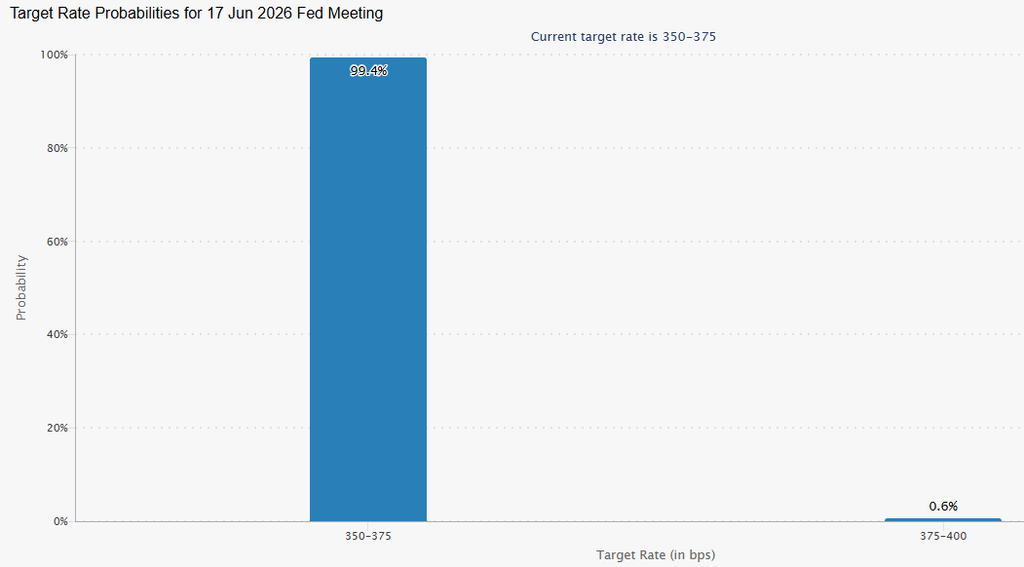
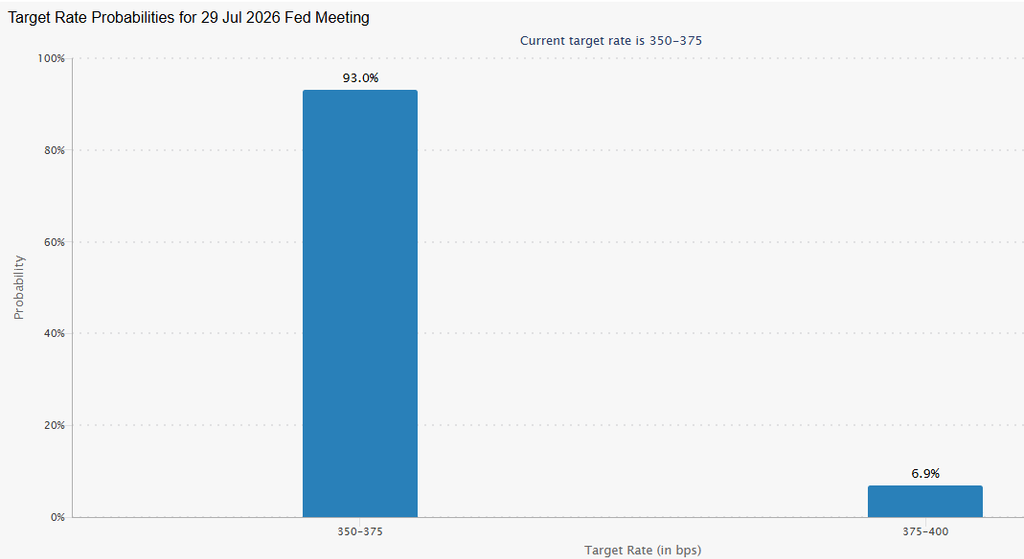
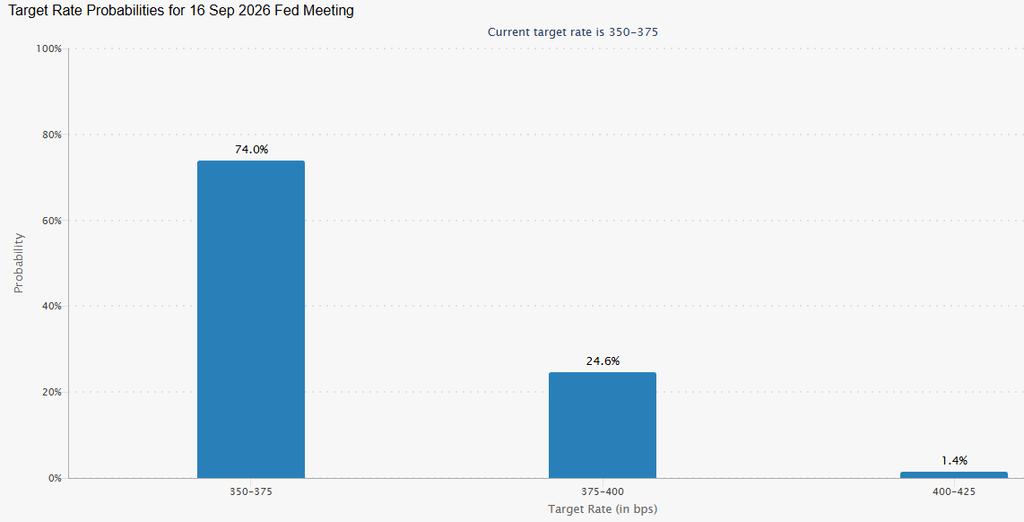
Source: CME FedWatch Tool – CME Group
As we enter the final month of the year’s first half, investors should remain mindful that several potential challenges may still lie ahead. In addition to the factors discussed above, the market has historically tended to “test” new Federal Reserve Chairmen as investors evaluate their policy decisions and leadership approach. Furthermore, midterm election years have often brought increased market volatility, particularly during the third quarter, as uncertainty surrounding political and economic policies can influence investor sentiment.
Information as of 6.10.26
Securities offered by Registered Representatives through Private Client Services, Member FINRA/SIPC. Advisory products and services offered by Investment Advisory Representatives through Rockport Wealth LLC, a Registered Investment Advisor. Private Client Services and Rockport Wealth LLC are unaffiliated entities. The opinions contained herein are that of the authors not necessarily that of Private Client Services LLC and there should not be any guarantees assumed from the information presented.
Investments in securities do not offer a fixed rate of return. Principal yield and/or share price will fluctuate with changes in market conditions, and when sold or rendered, you may receive more or less than originally invested. No system of financial planning strategy can guarantee future results. Investors cannot directly invest in indices. Past performance does not guarantee future results. The performance numbers we mention are indexes. If you’re a client, we manage a custom portfolio for your particular situation and the performance will be different. You cannot invest directly in an index. Investing in an index fund involves fees and will reduce your overall return compared to the index.
Charts produced at yCharts.com
Rockport Wealth Advisors is a DBA of Rockport Wealth, LLC, a fee-based Registered Investment Adviser (RIA) registered with the Securities and Exchange Commission and offering a full range of professional services. The scope of any financial planning and/or consulting services to be provided depends upon the needs of the client and the terms of the engagement. Please see our CRS & ADV disclosure documents for more information about our business.