
Key Takeaways
- Markets turned volatile in the final week of October, pushing major indexes lower
- Rising oil prices, inflation concerns, and shifting interest rate expectations remained in focus
- AI and semiconductor stocks faced a sharp pullback as investors reassessed valuations and the sustainability of AI spending
October Market Recap
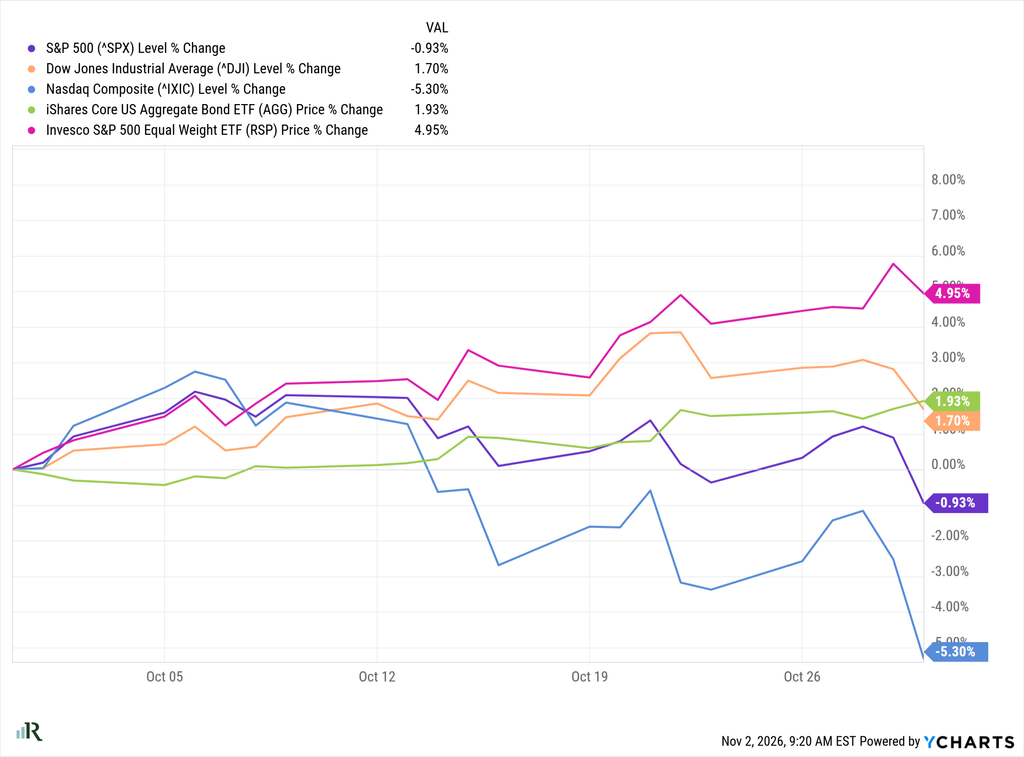
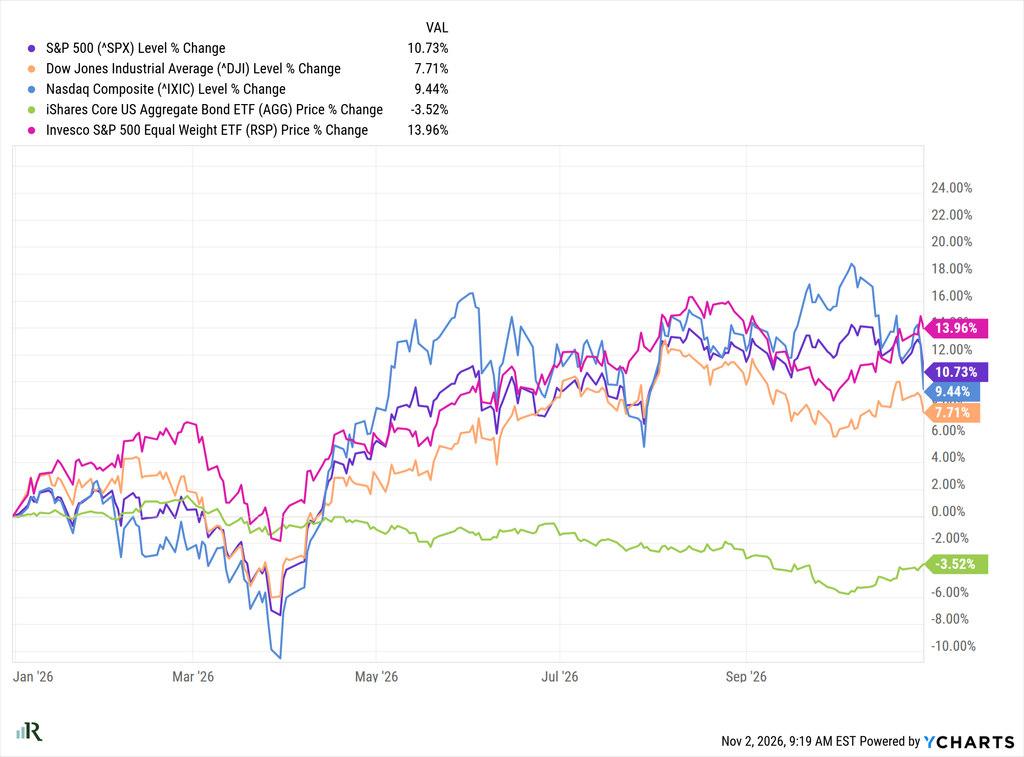
Markets were steady for most of October, holding flat to modestly higher, and the S&P 500 even reached a new all-time high on October 6th. Volatility picked up in the final week of the month, however, and pulled the major indexes into negative territory. When trading closed on October 30th, the S&P 500 had declined 0.93% for the month, while the Nasdaq fell 5.3%.
It’s worth noting that the pullback was concentrated in technology stocks rather than spread across the broader market. Despite October’s decline, both indexes remain well ahead for the year, with the S&P 500 up 10.73% and the Nasdaq up 9.44% year to date.
Looking Ahead
With the midterm elections behind us, we expect attention to return to economic fundamentals, including growth, inflation, and interest rates, along with market valuations and corporate earnings.
Oil, Inflation, & interest Rates
Interest Rates
The Federal Reserve held its benchmark rate steady at 3.75%-4.00% at its October 28th meeting, following September’s quarter-point increase, the first rate hike since 2023. The vote was 10-2, with two policymakers preferring another quarter-point hike. The Fed noted that inflation “remains elevated,” and markets now see a rate increase at the December 9th meeting as likely.
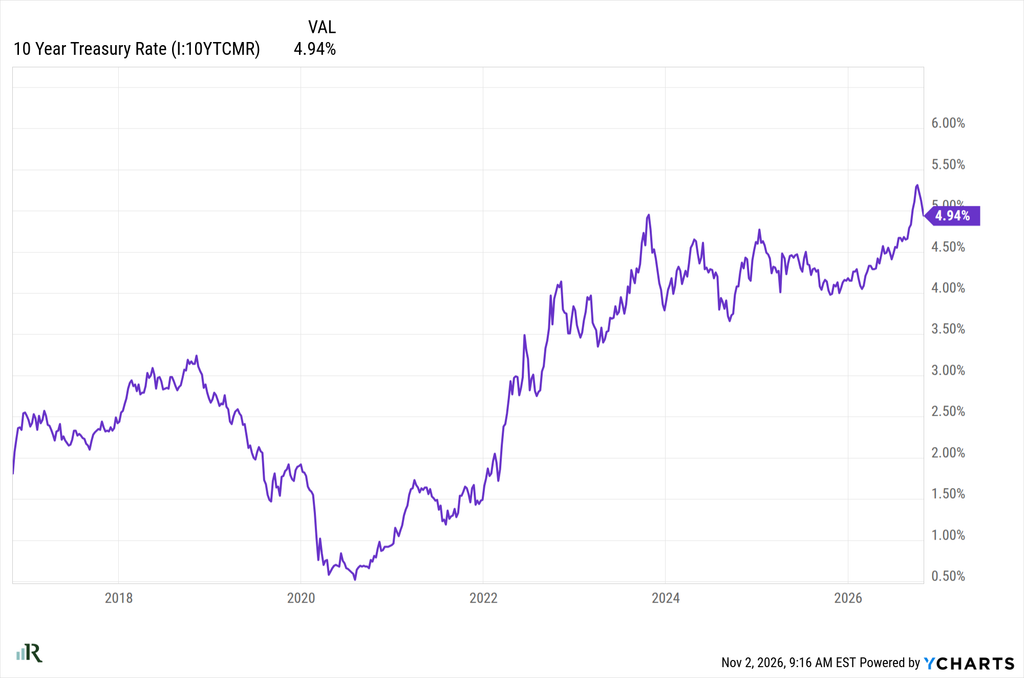
The 10-year Treasury yield, a key benchmark for mortgages and other borrowing costs, peaked near 5.31% on October 5th and then eased, ending the month around 4.93%, down from about 5.29% at the end of September.
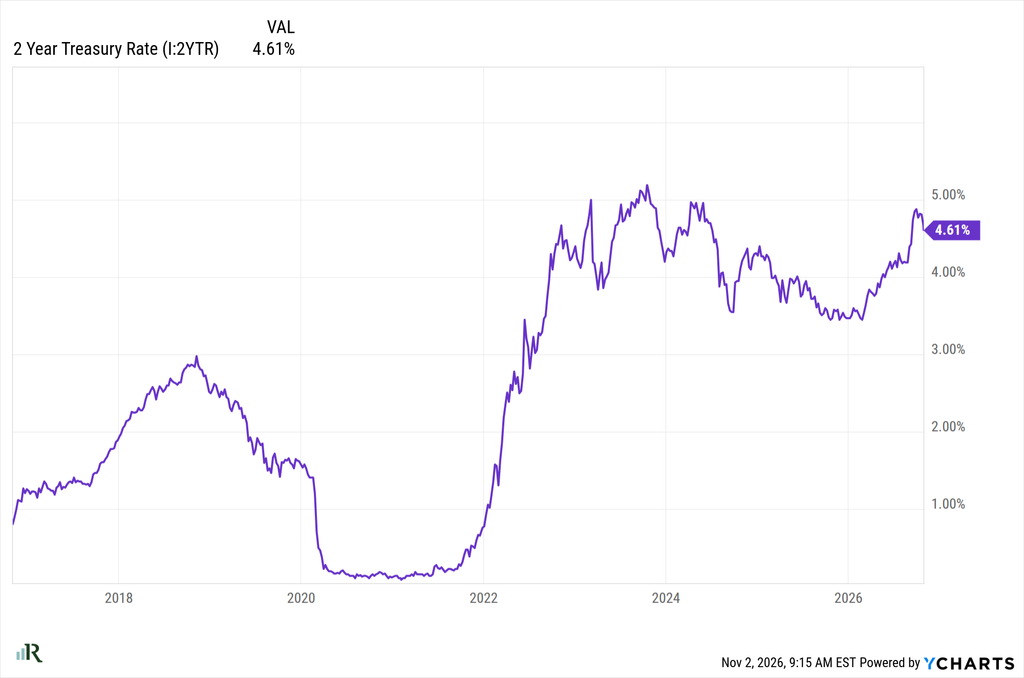
The 2-year Treasury yield, which closely tracks expectations for Federal Reserve policy, ended October at about 4.60%, down from 4.88% at the end of September, a decline of roughly 0.3 percentage points. Finishing the month above the Fed’s current 3.75%-4.00% target range, is a sign that markets expect further rate hikes. That fits with futures pricing, which showed a quarter-point hike in December as likely following the Fed’s October 28th decision to hold rates steady.
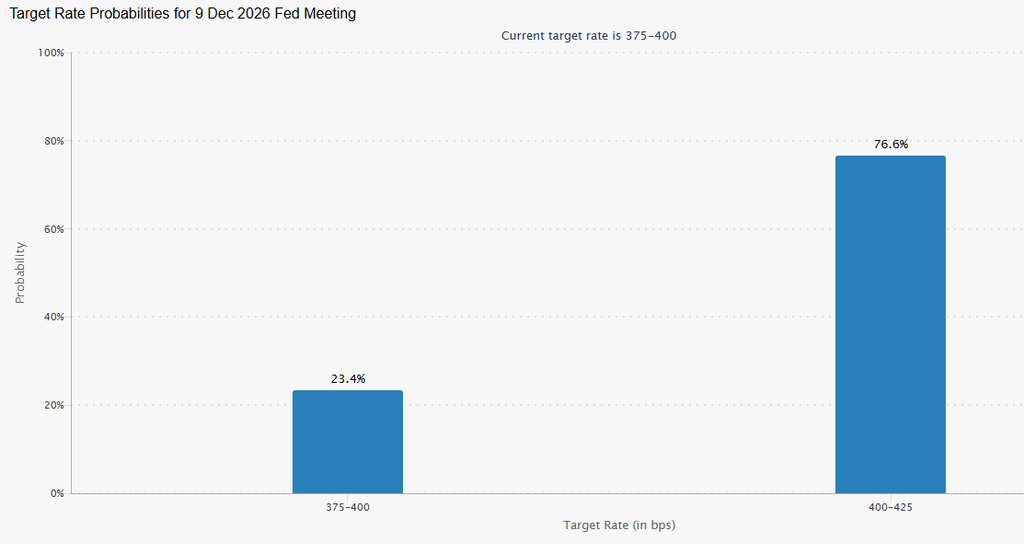
Source: CME FedWatch Tool – CME Group
Oil
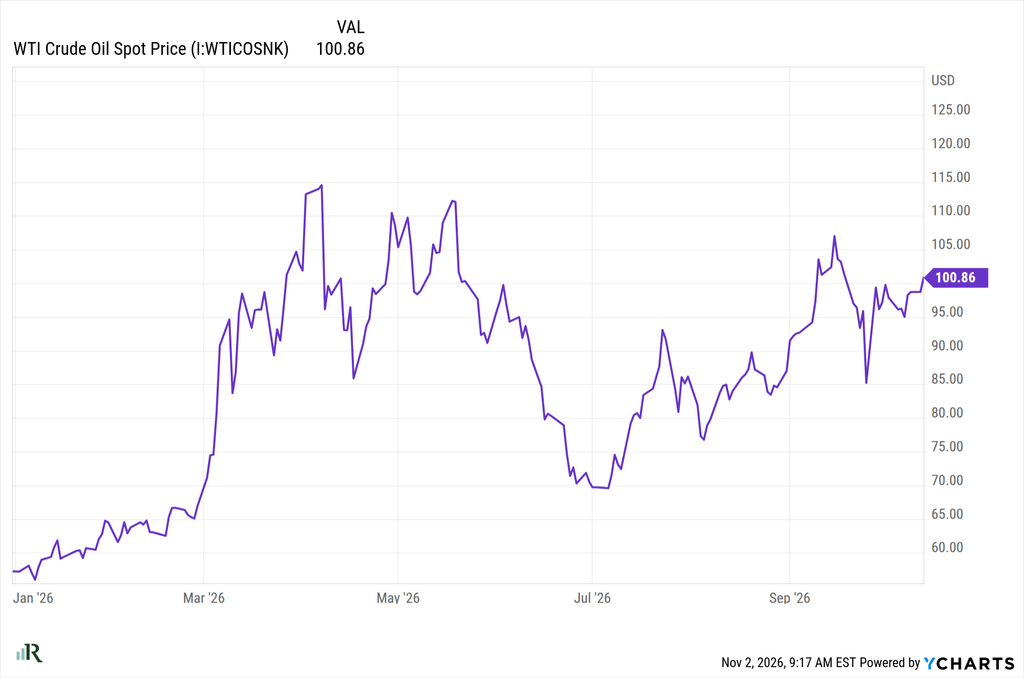
Oil prices climbed through the month on continuing Middle East tensions, including the conflict involving Iran. Brent crude, the global benchmark, finished October above $115 a barrel, up about 12% from a month earlier. U.S. crude (WTI) ended the month near $104.
Inflation
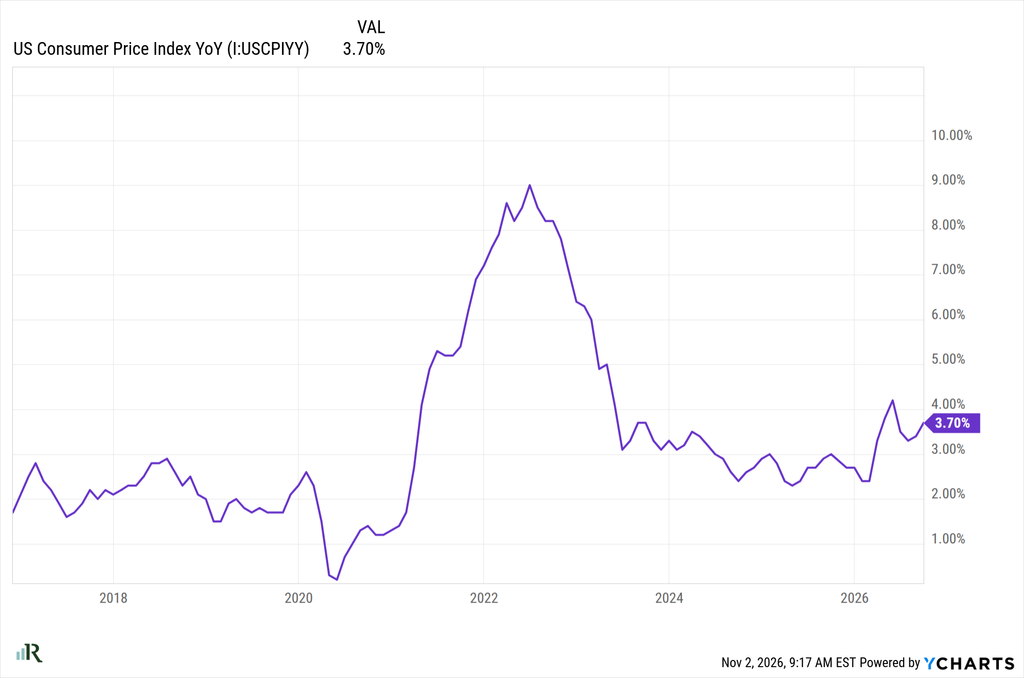
The September Consumer Price Index, released on October 14th, showed prices up 3.7% from a year earlier, up from 3.4% in August and above economists’ expectations. Higher energy costs drove the increase, with gasoline up 9.1% for the month. Core inflation, which excludes food and energy, was 2.6% for the year, up from 2.4% in August. The October inflation report is due November 10th.
AI Stocks in October: A Sharp Pullback in a Leadership Group
After setting record highs on October 6th, AI and semiconductor stocks reversed course. The 47 largest AI and chip stocks lost roughly $5 trillion in market value from that peak through month-end, while the other large U.S. stocks gained about $1.3 trillion. A popular semiconductor ETF (SOXX) fell about 17% in October, though it remains up more than 50% for the year. That is a big reason the Nasdaq fell 5.3% in October while the equal-weighted S&P 500 gained.
What Drove It
- Higher borrowing costs: Hot inflation data on October 14th raised expectations for more Fed rate hikes, a concern for companies funding massive AI buildouts with debt. CoreWeave, a heavily indebted AI cloud provider, fell about 15% in a single day.
- Spending and returns: Investors questioned whether the huge AI infrastructure investments will pay off, and competition from China added pressure on memory chipmakers.
- Late-month selling: Tech and chip stocks fell sharply on October 30th, as results and guidance from large tech companies weighed on the group.
Where Things Stand
AI remains a powerful long-term theme, but this pullback is a reminder of how concentrated market leadership has become. Valuations, financing costs, and spending sustainability now matter more. October reminded us that markets rarely move in a straight line. Rising rates, elevated oil prices, and a sharp pullback in AI-related stocks made for a volatile month, even as many parts of the market held up well.
Periods like this are why we stay committed to diversification and a long-term plan built around your goals, not short-term headlines.
Information as of 11.9.26
Securities offered by Registered Representatives through Private Client Services, Member FINRA/SIPC. Advisory products and services offered by Investment Advisory Representatives through Rockport Wealth LLC, a Registered Investment Advisor. Private Client Services and Rockport Wealth LLC are unaffiliated entities. The opinions contained herein are that of the authors not necessarily that of Private Client Services LLC and there should not be any guarantees assumed from the information presented.
Investments in securities do not offer a fixed rate of return. Principal yield and/or share price will fluctuate with changes in market conditions, and when sold or rendered, you may receive more or less than originally invested. No system of financial planning strategy can guarantee future results. Investors cannot directly invest in indices. Past performance does not guarantee future results. The performance numbers we mention are indexes. If you’re a client, we manage a custom portfolio for your particular situation and the performance will be different. You cannot invest directly in an index. Investing in an index fund involves fees and will reduce your overall return compared to the index.
Charts produced at yCharts.com
Rockport Wealth Advisors is a DBA of Rockport Wealth, LLC, a fee-based Registered Investment Adviser (RIA) registered with the Securities and Exchange Commission and offering a full range of professional services. The scope of any financial planning and/or consulting services to be provided depends upon the needs of the client and the terms of the engagement. Please see our CRS & ADV disclosure documents for more information about our business.

Joe Kovach is Partner and Chief Investment Officer at Rockport Wealth Advisors. He has 30+ years of experience helping individuals and small businesses reach their retirement, short-term, and long-term financial goals. Joe began his career in financial planning in 1994 and went on to start Rockport Wealth Advisors. He earned his Bachelor of Business Administration in Marketing from Cleveland State University, is a CERTIFIED FINANCIAL PLANNER™ professional and Chartered Mutual Fund Counselor, and holds the Series 7 registration.