
Key Takeaways
- Market shrugs off several economic factors to post positive month
- Bond yields rise
- Inflation back on the rise
Stock Market Recap
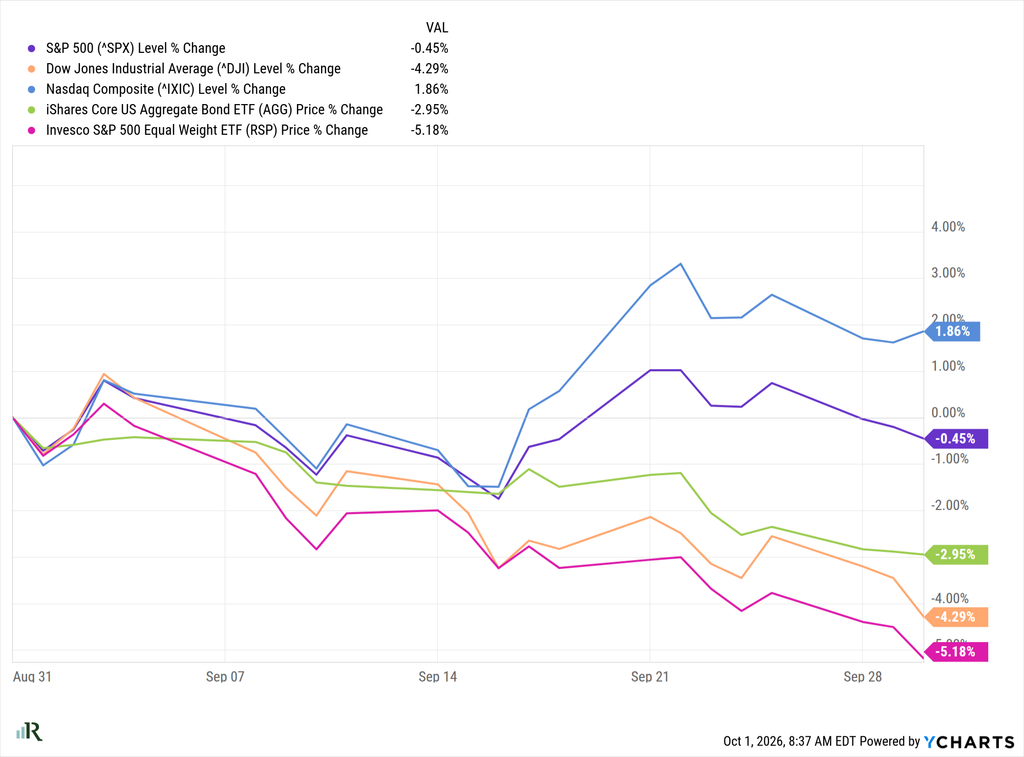
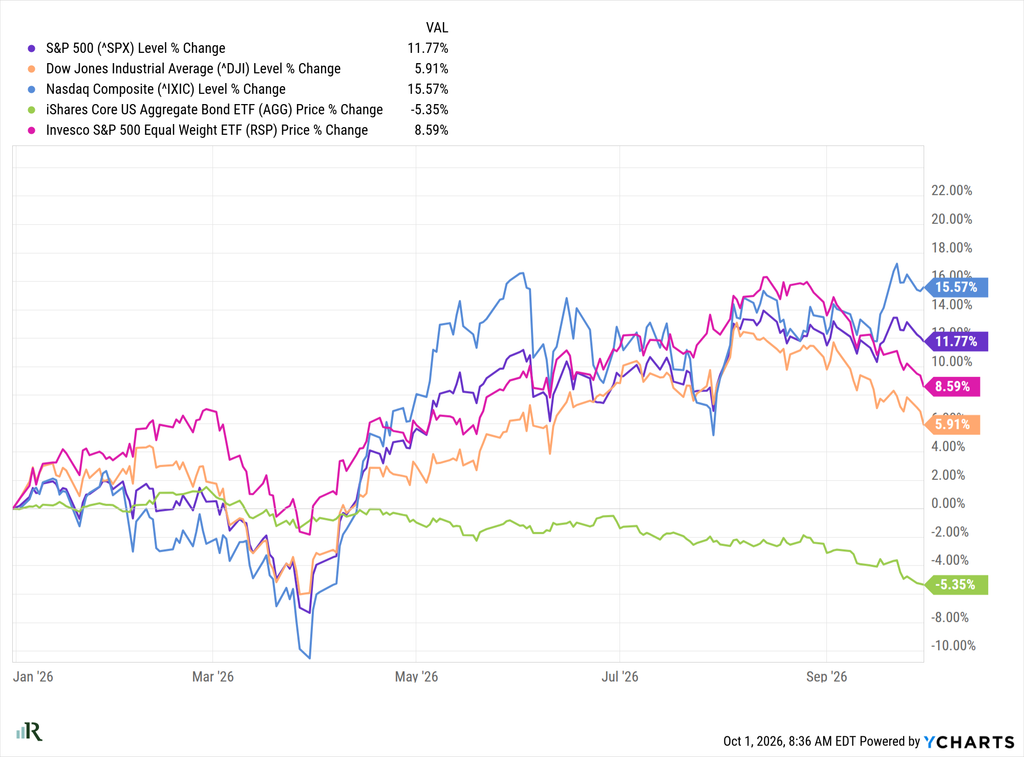
Stocks finished what has historically been one of the slower months for the market with a modest pullback in some of the major indexes. The S&P 500 declined 0.45% in September, but remains up an impressive 11.77% for the year. The technology-heavy Nasdaq continued to outperform, gaining 1.86% for the month and bringing its year-to-date return to 15.57%.
However, not all areas of the market participated in the gains. The S&P 500 Equal Weight Index, which gives each company in the S&P 500 a similar influence rather than allowing the largest companies to dominate, declined 5.18% during the month. It remains up 8.59% for the year. Bonds also had a difficult month, with the U.S. Aggregate Bond Index falling 2.95% in September and now down 5.35% year to date.
Looking at the bigger picture, we are disappointed to see market participation narrowing again. After several months in which gains were becoming more widespread across different sectors and companies, the market has once again become increasingly dependent on a relatively small group of large technology stocks. At the same time, portfolios with significant bond exposure have faced additional pressure as interest rates have moved higher.
While the overall market remains strong for the year, we believe it is important to look beyond the headline S&P 500 number. A market being driven by fewer stocks, combined with rising interest rates and weakness in bonds, is something we will continue to monitor closely as we move into the final quarter of the year.
Bond Yields Rise
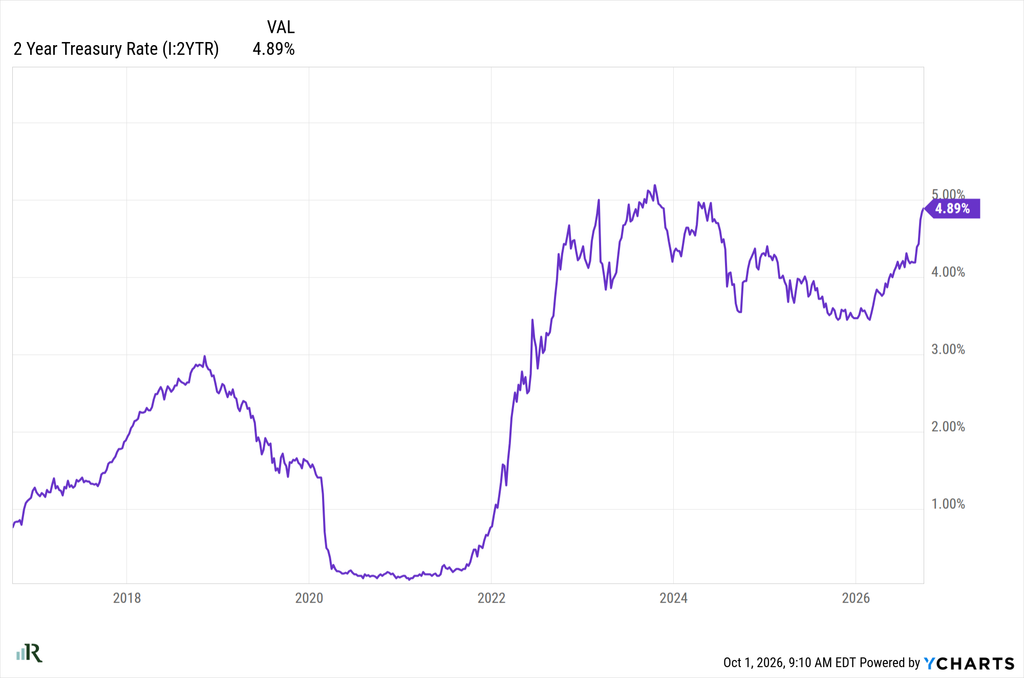
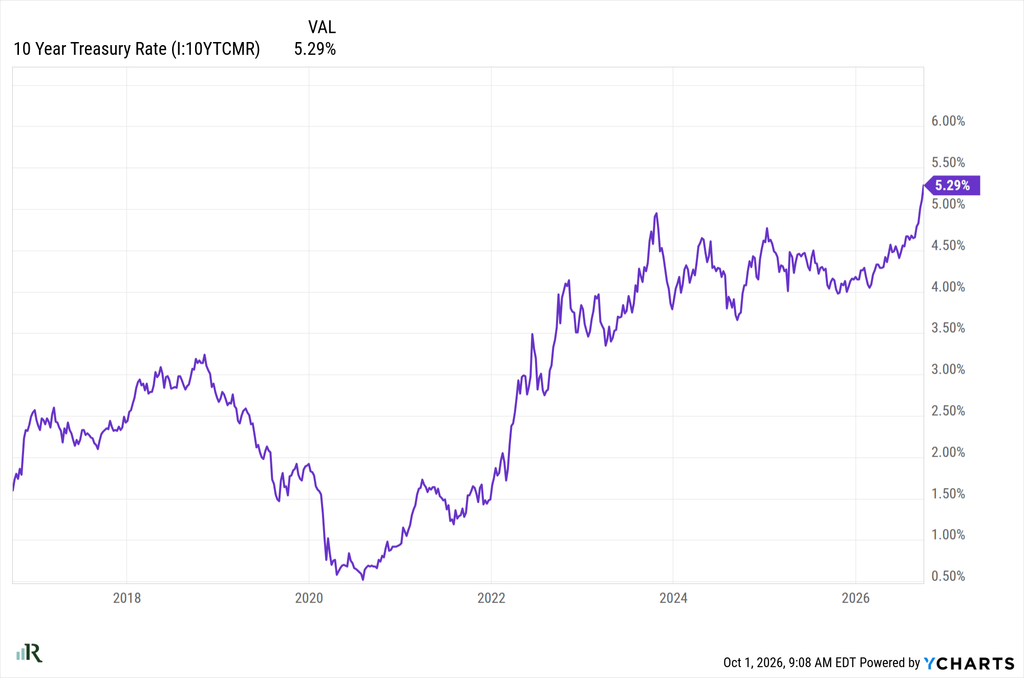
One of the main factors contributing to the recent increase in market volatility has been the fairly sharp rise in bond yields. This can be seen in the 2.95% decline in the Aggregate Bond Index during the month. As shown in the charts below, the 2-year Treasury yield has risen to 4.89%, while the 10-year Treasury is now yielding 5.29%— its highest level since 2007.
Why does this matter? The 10-year Treasury yield is an important benchmark for many borrowing costs throughout the economy. When it rises, it can put upward pressure on mortgage rates, auto loans, corporate borrowing costs and other forms of consumer credit. Higher borrowing costs can reduce affordability and demand, which can eventually slow economic growth.
Higher rates also create an additional challenge for the federal government. With more than $30 trillion of debt outstanding, the government must continually refinance portions of that debt. The higher interest rates remain, the more expensive that refinancing becomes, potentially putting even greater pressure on the federal budget.
There is also an important consideration for investors. When the 10-year Treasury was yielding only 1% or 2%, investors had relatively little income available from high-quality bonds compared with stocks. With the 10-year Treasury now yielding around 5.3%, bonds have become a much more meaningful alternative. In other words, investors no longer have to take as much stock-market risk to earn a reasonable return from their investments. This creates more competition between stocks and bonds and can put additional pressure on stock valuations.
The 2-year Treasury yield is also worth watching closely. As we have discussed in previous newsletters, the 2-year note often provides insight into where investors expect the Federal Reserve to move short-term interest rates. Currently, the Federal Funds rate is 3.75%–4.00%, while the 2-year Treasury is yielding approximately 4.89%. This difference suggests that the bond market is pricing in the possibility of additional rate increases rather than expecting significant rate cuts in the near term.
For all of these reasons, we would view a stabilization or decline in bond yields as a positive development. Lower yields would help ease borrowing costs, support the housing and credit markets, reduce the government’s refinancing burden, and make the overall investment environment somewhat more favorable for both stocks and bonds.
Inflation back on the Rise (slightly)
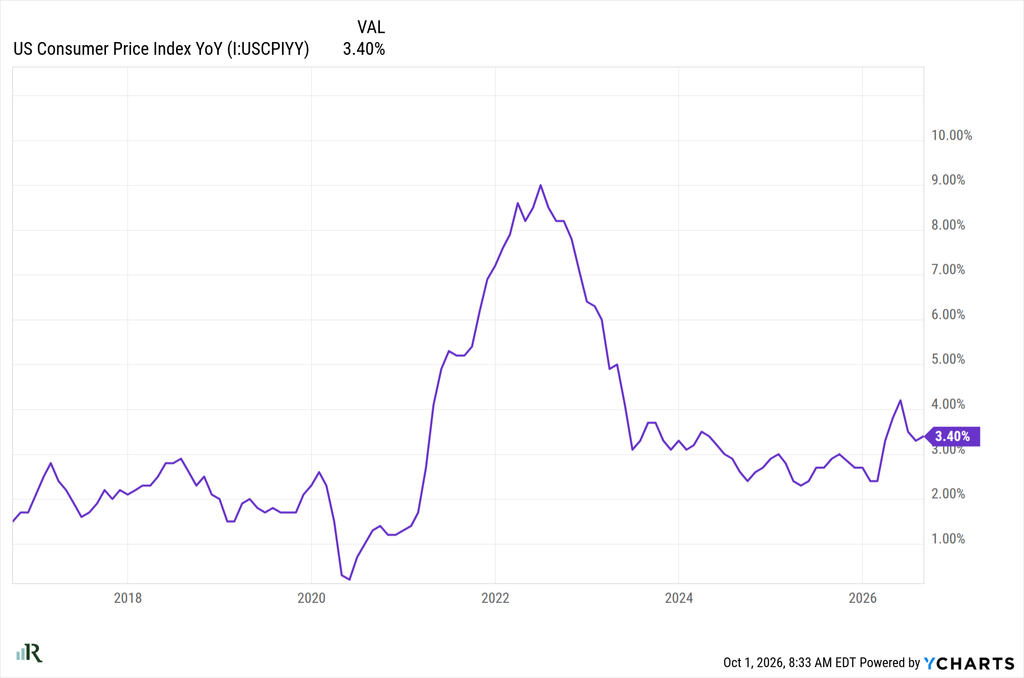
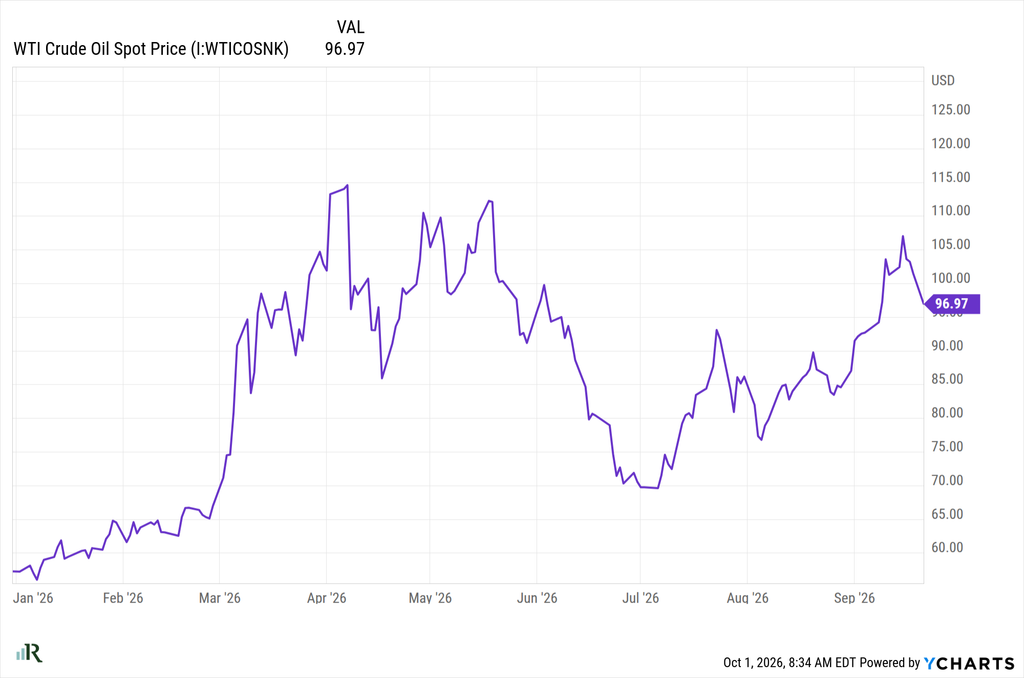
The latest inflation numbers continue to be a concern. The Consumer Price Index (CPI) rose to 3.4%, with higher energy prices once again playing an important role. West Texas Intermediate (WTI) crude oil remains near $100 per barrel, and gasoline prices increased more than 3% during the month. Gasoline prices are now more than 25% higher than they were a year ago.
The increase in energy prices has offset some of the improvement we have seen in other areas of inflation, particularly housing and rent costs. While there are signs that some of the underlying inflation pressures are easing, higher energy prices can quickly work their way through the economy by increasing transportation, manufacturing and consumer costs.
The inflation picture is also important when we consider the Federal Reserve. As discussed above, the rise in the 2-year Treasury yield suggests that investors are increasingly concerned that the Fed may need to keep interest rates higher for longer—or potentially raise rates further.
At the moment, the market is assigning a 59.4% probability to a 0.25% rate increase by December. There is also roughly a 30% probability of two additional 0.25% increases by year-end. While another rate hike over the next several months is certainly possible, we believe three additional increases would be a much more aggressive outcome and are less likely.
For now, the Federal Reserve faces a difficult balancing act. It needs to keep inflation under control without putting unnecessary pressure on an economy that is already showing signs of slowing. This is one of the reasons we continue to believe that interest rates, inflation and energy prices will be important factors for investors to watch closely in the months ahead.
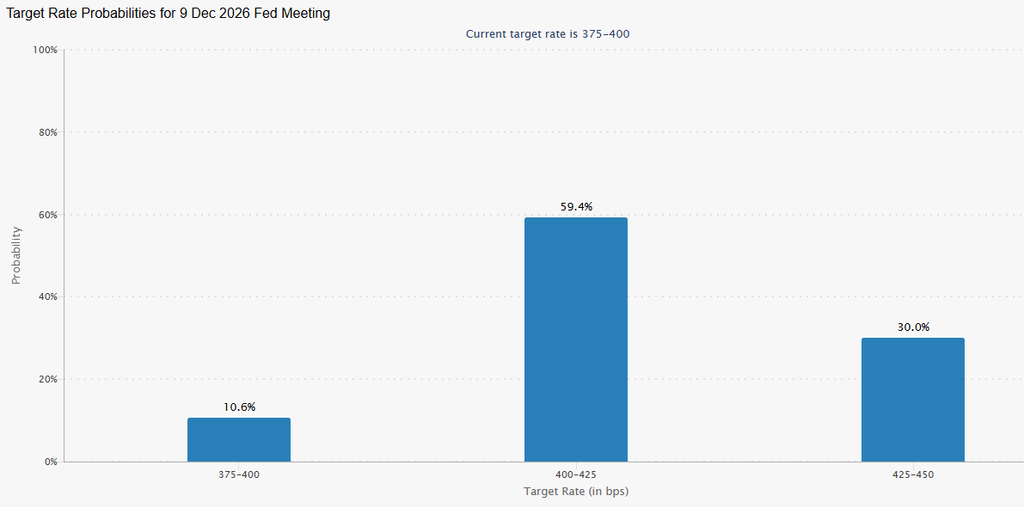
Source: CME FedWatch Tool – CME Group
Overall, the market continues to face a number of crosscurrents. Stocks have remained resilient, but rising bond yields, higher inflation and the possibility of additional Fed rate hikes create meaningful challenges. While we remain optimistic about the long-term opportunities in the market, we believe this is a time to stay disciplined, diversified and focused on managing risk rather than chasing recent gains. As always, we will continue to monitor these developments and adjust as opportunities and risks evolve.
Information as of 10.7.26
Securities offered by Registered Representatives through Private Client Services, Member FINRA/SIPC. Advisory products and services offered by Investment Advisory Representatives through Rockport Wealth LLC, a Registered Investment Advisor. Private Client Services and Rockport Wealth LLC are unaffiliated entities. The opinions contained herein are that of the authors not necessarily that of Private Client Services LLC and there should not be any guarantees assumed from the information presented.
Investments in securities do not offer a fixed rate of return. Principal yield and/or share price will fluctuate with changes in market conditions, and when sold or rendered, you may receive more or less than originally invested. No system of financial planning strategy can guarantee future results. Investors cannot directly invest in indices. Past performance does not guarantee future results. The performance numbers we mention are indexes. If you’re a client, we manage a custom portfolio for your particular situation and the performance will be different. You cannot invest directly in an index. Investing in an index fund involves fees and will reduce your overall return compared to the index.
Charts produced at yCharts.com
Rockport Wealth Advisors is a DBA of Rockport Wealth, LLC, a fee-based Registered Investment Adviser (RIA) registered with the Securities and Exchange Commission and offering a full range of professional services. The scope of any financial planning and/or consulting services to be provided depends upon the needs of the client and the terms of the engagement. Please see our CRS & ADV disclosure documents for more information about our business.